



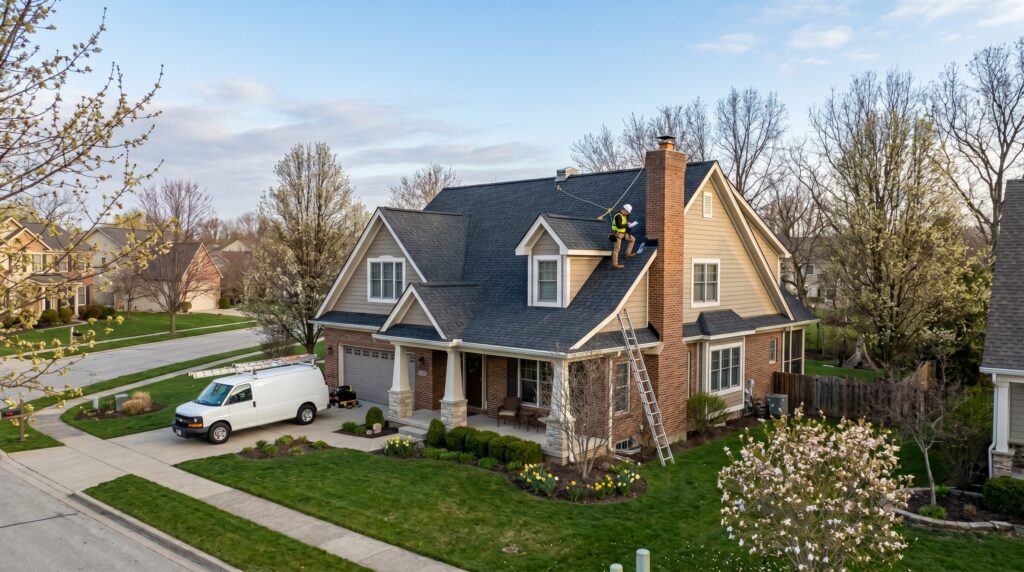
The transition from a freezing Central Ohio winter to a rainy spring can take a massive toll on your home’s exterior. Ice dams, heavy snow loads, and high winds often leave behind hidden damage that isn’t visible until water starts entering your home. That is why completing a roof inspection in Westerville, OH is an essential part of spring maintenance. Spotting small issues now prevents catastrophic leaks during heavy April downpours. Use this homeowner checklist to ensure your property is ready for the season.
Why Is a Spring Roof Inspection Important in Ohio?
Central Ohio experiences aggressive freeze-thaw cycles throughout winter. Water gets under shingles, freezes, expands, and pries the roofing materials apart. Once the ice melts in the spring, those newly formed gaps are completely exposed to rain. You may not see any interior signs of this damage until weeks later, when a significant rain event pushes water further through an existing pathway. A proactive spring inspection in Westerville and the surrounding area catches these vulnerabilities before water enters your ceiling — and before a minor repair becomes a major bill.
What Should I Look for During a Visual Roof Inspection?
Grab a pair of binoculars and walk around the perimeter of your home. You are looking for visual irregularities, including:
- Missing or Curled Shingles: High winter winds can tear shingles clean off, or cause the edges to curl upward, breaking the watertight seal. Each missing shingle is an open door for water to seep in.
- Damaged Flashing: Look closely at the metal strips around your chimney, skylights, vent pipes, and roof valleys. Cracked sealant, rust, or lifted flashing edges are among the most common sources of leaks after a winter storm.
- Granule Loss: Check your gutters and downspouts for an accumulation of dark, sand-like granules — a reliable sign that your shingles are aging and losing their protective coating.
- Sagging Areas: If any part of the roofline appears to droop, this indicates a serious structural issue or rotted decking that needs immediate professional attention.
- Moss or Algae Growth: Winter moisture creates ideal conditions for moss and algae. Left untreated, these can accelerate shingle deterioration over time.
How Do I Check My Attic for Hidden Roof Leaks?
A proper spring roof inspection doesn’t just happen outside. Head into your attic during the day and look for:
- Daylight Through the Roof Boards: If you can see sunlight through the boards, water can get through just as easily.
- Water Stains or Dark Streaks: Look for discoloration on wood framing or rafters — these are signs of an active or recent leak.
- Damp or Compressed Insulation: Wet insulation is a strong indicator that water has been entering. It also loses its effectiveness at regulating temperature, which can raise your energy bills.
- Mold or Mildew: Mold spreads quickly once it takes hold. If you spot any signs, address both the source (the roof) and the mold itself promptly. Proper attic ventilation is key to preventing it from returning.
What Else Should I Check Around My Home’s Exterior?
A roof inspection in Westerville, OH should extend beyond the shingles themselves. While you are walking the perimeter:
- Clean and inspect your gutters and downspouts. Clogged gutters cause water to back up onto the roof edge, leading to rot and leaks along the fascia. Look for granule buildup, cracks, or sections pulling away from the house.
- Trim overhanging tree branches. Branches extending over your roof can scrape shingles during windstorms and deposit leaves and debris that trap moisture.
- Check soffits and eaves for pest entry points. Squirrels, birds, and insects often seek warm shelter over winter. Look for chewed sections, holes, or nesting materials, particularly around soffits and eaves.
When Should I Call a Professional Roofing Contractor in Central Ohio?
If you spot any of the red flags on this checklist — or if your roof is older than 15 to 20 years — it is safest to have an expert take a look. A trained roofing professional can identify subtle issues like soft spots in the decking, minor flashing failures, and broken shingle seals that are easy to miss from the ground. Don’t wait for a leak to ruin your spring. The team at Ratliff Contracting provides fast, reliable roof inspections for homeowners throughout Westerville and Central Ohio. Contact us today to schedule a professional evaluation and secure your home against the unpredictable Ohio weather.