



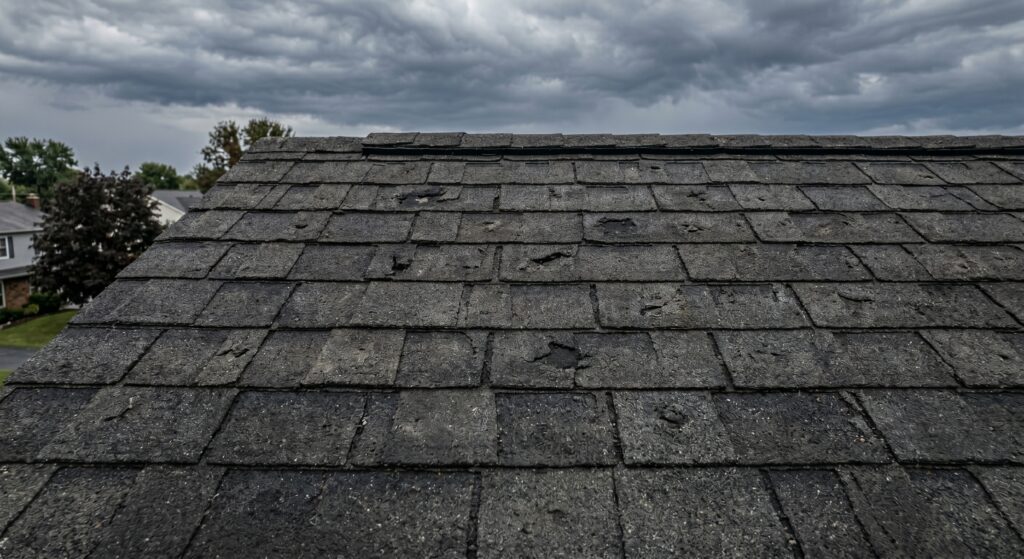
When spring storms roll through Central Ohio, they often bring high winds and destructive hail. If you are wondering what hail damage looks like on a roof, you aren’t alone. Many homeowners in Columbus and the surrounding suburbs don’t realize their home has been compromised until a major leak occurs months later. Identifying hail damage on a Columbus roof early is the key to preventing costly interior water damage and structural issues. Here is exactly what you should look for after a severe storm — and what Central Ohio homeowners should do next.
How Big Does Hail Have to Be to Cause Roof Damage?
You might assume damage only happens with large, baseball-sized hail — but that is rarely the case. Hail as small as 1 inch in diameter (roughly the size of a quarter) can damage asphalt shingles, especially on older or worn roofs. Factors like wind speed, the angle of impact, and your roof’s age all play a role in how much damage is sustained. When in doubt after any significant storm in the Columbus area, it is worth having a professional take a look.
What Are the Signs of Hail Damage on Asphalt Shingles in Central Ohio?
Asphalt shingles are the most common roofing material in Ohio, but they are highly susceptible to hail impacts. When inspecting your roof from the ground (or looking at fallen shingles), watch for:
- Bruising or Dents: Small, dark, circular depressions where the hail physically struck the shingle. These impacts are soft to the touch — like a bruise on an apple — and compromise the fiberglass mat beneath the surface.
- Granule Loss: If you check your gutters and downspouts and see a heavy accumulation of black, sand-like granules, the protective layer of your shingles has been knocked loose.
- Exposed Matting: When the granules are stripped away, the shiny, black asphalt underneath is exposed to UV rays, which will cause it to crack and fail rapidly.
How Does Hail Affect Other Parts of My Home’s Exterior?
Sometimes it’s hard to see roof damage from the ground. However, collateral damage is a strong indicator that your roof took a beating. Check for:
- Dents on your aluminum gutters, downspouts, or gutter guards.
- Cracks or holes in vinyl siding (note: aluminum surfaces tend to dent, while vinyl tends to crack).
- Dented or chipped paint on metal fascia, window casings, or garage doors.
- Dents or dings on roof vents, flashing, chimneys, and skylights — these metal components show hail impact clearly and are a key part of any professional inspection.
Can Minor Hail Damage Cause My Roof to Leak?
Yes. Even if a hail strike doesn’t immediately puncture the roof, it weakens the shingle’s integrity. Hail impacts create small fractures that expand as temperatures change through Ohio’s freeze-thaw cycles. Over time, normal rain, UV exposure, and freezing winter temperatures will break down that weakened spot, eventually allowing water to seep through to the underlayment and into your attic.
What Should I Do If I Suspect Hail Damage on My Columbus Roof?
Never climb onto a potentially damaged roof yourself. If you notice any of the signs above after a storm, here is what to do:
- Document everything. Walk around your property and photograph any damage to gutters, siding, and exterior surfaces while it is fresh.
- Note the storm date and size. This information is critical for filing a homeowner’s insurance claim. Most standard policies cover hail damage, but timely reporting matters.
- Call a professional roofing contractor for a thorough inspection. A trained eye can identify bruising, fractured shingles, and damaged flashing that isn’t visible from the ground.
At Ratliff Contracting, we provide thorough, honest inspections for homeowners throughout Columbus and Central Ohio. If your home has sustained significant damage, we will walk you through the process, helping you navigate the insurance paperwork so your home stays protected for decades to come.
Suspect storm damage? Contact Ratliff Contracting today for a free roof inspection.